Sunday, June 18, 2006
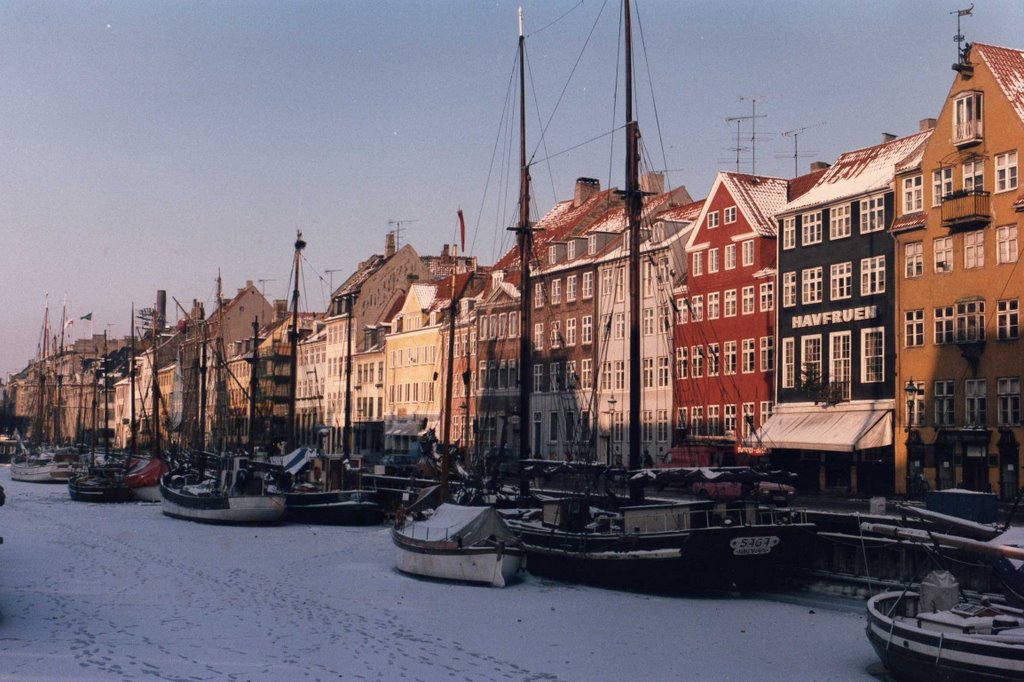
Copenhagen, Denmark
This picture of a frozen Copenhagen taken in the winter of either 1984 or 1985. Note the footprints on the frozen wanter.


Images from the USS Texas
I took the following pictures onboard the USS Texas in the summer of 1985 somewhere northwest of Pearl Harbor, Hawaii. The USS Texas is a Virginia class guided missle cruiser.

The sea for this Pacific ocean sunset was glassy smooth, smoother than I thought possible on the ocean.

Sunday, June 11, 2006
Conservative Rock Songs ?
I have a pair of headphone-style noise protectors with a built-in FM radio that I wear while mowing the grass and weedeating. When I was working in the yard this week I heard about a conservative journalist named John J. Miller at the National Review who came up with a list of The 50 Greatest Conservative Rock songs.
The third song on the list was the one that amused me the most. The journalist picked "Sympathy for the Devil" by the Rolling Stones as the 3rd greatest conservative rock-n-roll song of all time. The reason? He calls the song The Screwtape Letters of rock, a reference to the classic book of Christian apologetics by C.S. Lewis (also of The Chronicles of Narnia fame.)
John Miller made some good points on the radio about how in the songs lyrics, the Devil took credit for such things as Pilate sending Jesus to be crucified, the Nazi blitzkrieg and the killing of the Czar and his family which came with the start of communism in Russia.
Copyright © 2006 by Philip Hartman - All Rights Reserved
The third song on the list was the one that amused me the most. The journalist picked "Sympathy for the Devil" by the Rolling Stones as the 3rd greatest conservative rock-n-roll song of all time. The reason? He calls the song The Screwtape Letters of rock, a reference to the classic book of Christian apologetics by C.S. Lewis (also of The Chronicles of Narnia fame.)
John Miller made some good points on the radio about how in the songs lyrics, the Devil took credit for such things as Pilate sending Jesus to be crucified, the Nazi blitzkrieg and the killing of the Czar and his family which came with the start of communism in Russia.
Copyright © 2006 by Philip Hartman - All Rights Reserved
Sunday, May 14, 2006
The Other WWII Memorial
On a recent visit to Annapolis, Maryland I stumbled across the Maryland World War II Memorial. I posted pictures of the National WWII Memorial a while back. The memorial is located immediately across the Severn River from the U.S. Naval Academy.
 The memorial has the names of Maryland residents killed in the armed forces during WWII.

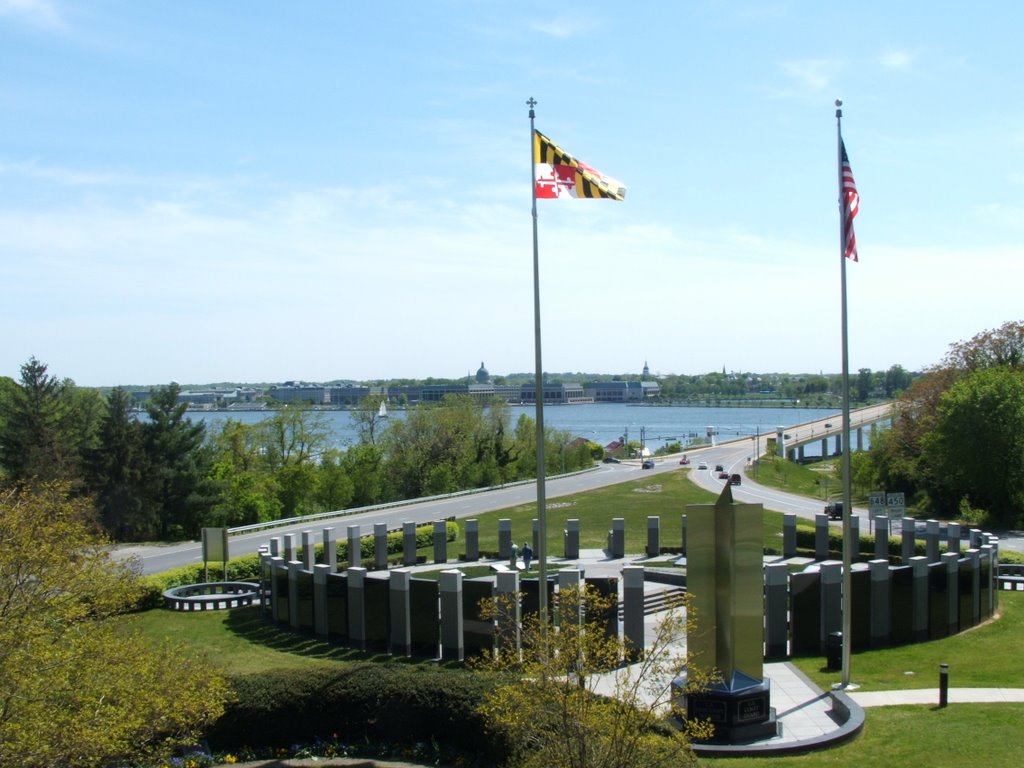 The memorial has the names of Maryland residents killed in the armed forces during WWII.
Wednesday, May 10, 2006
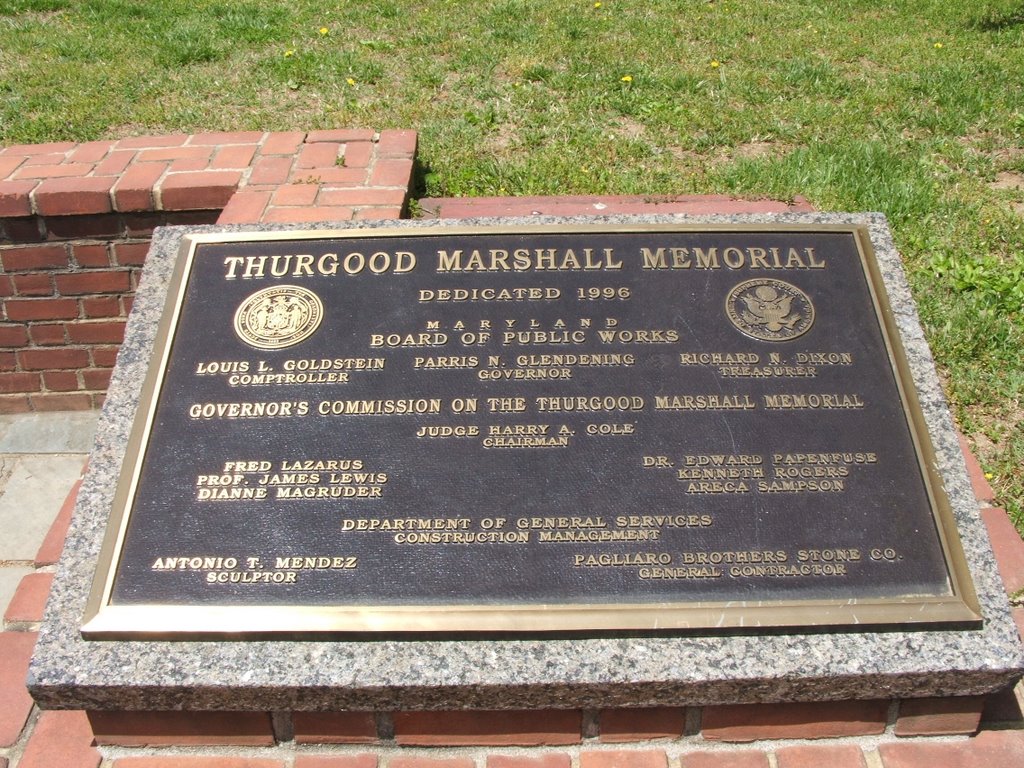
Thurgood Marshall Memorial
While strolling around historic Annapolis, Maryland (I got to combine a few hours of pleasure with a business trip to Baltimore), I stumbled across a memorial to Supreme Court Justice Thurgood Marshall. Its across the street from the Maryland State Capital as is shown on this photo below. All pictures taken in April 2006.

The memorial from the front.

A close-up of the memorial plaque.
Saturday, May 06, 2006
Remember the Maine!
The USS Maine was blown up in Havana harbor on February 15, 1898. The foremast of the USS Maine was recovered on October 6, 1910 and errected as a memorial on the campus of the US Naval Academy in Annapolis, Maryland on May 5, 1913.


US Naval Academy campus
United States Naval Academy in Annapolis, Maryland on the banks of the Severn River. Picture taken from the opposite side the river in April 2006. The large dome to the right of center is the US Naval Academy Chapel. The second and smaller appearing dome-like structure a little farther to the right is the top of the Maryland State Capital building just a couple of blocks up Marland Avenue on the back side of the campus.


Friday, May 05, 2006
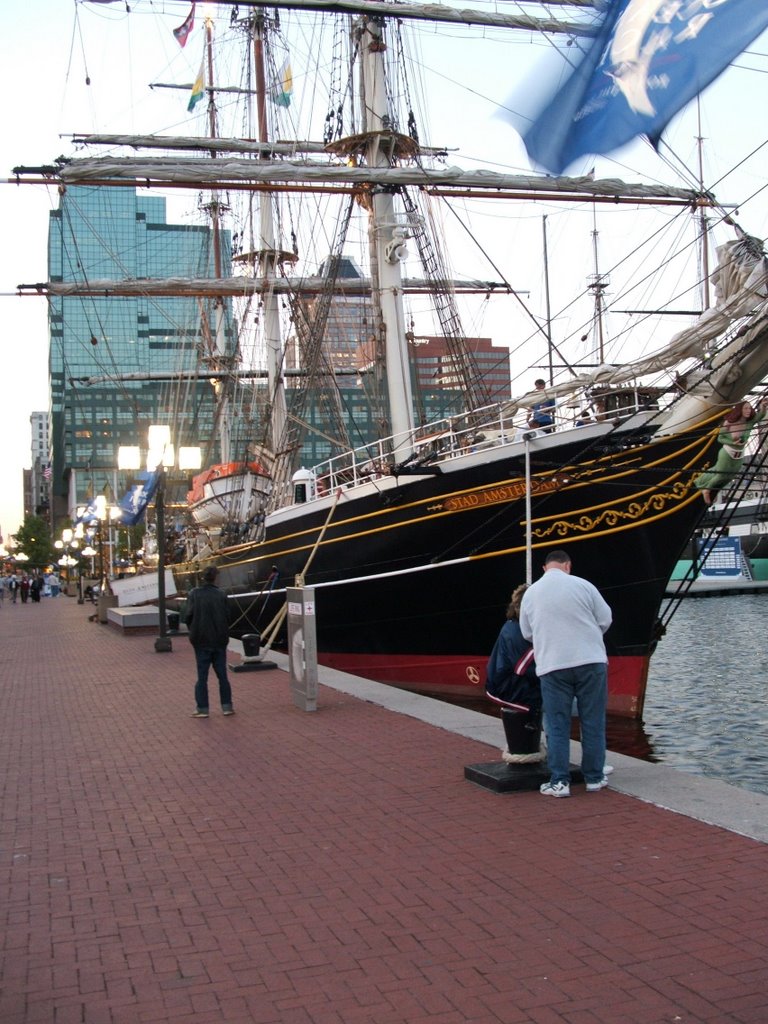
Stad Amsterdam
The tall sailing ship "Stad Amsterdam" docked in Baltimore, Maryland in the Inner Harbor. Picture taken the first week of May 2006. The USS Constellation is docked on the right hand side of the picture as well.
The "Stad Amsterdam" is of recent manufacture and is both a symbol of the heritage of the city of Amsterdam in the Netherlands and is used to train young people in how to run a sailing ship. For more information on the ship, click here.


The "Stad Amsterdam" is of recent manufacture and is both a symbol of the heritage of the city of Amsterdam in the Netherlands and is used to train young people in how to run a sailing ship. For more information on the ship, click here.

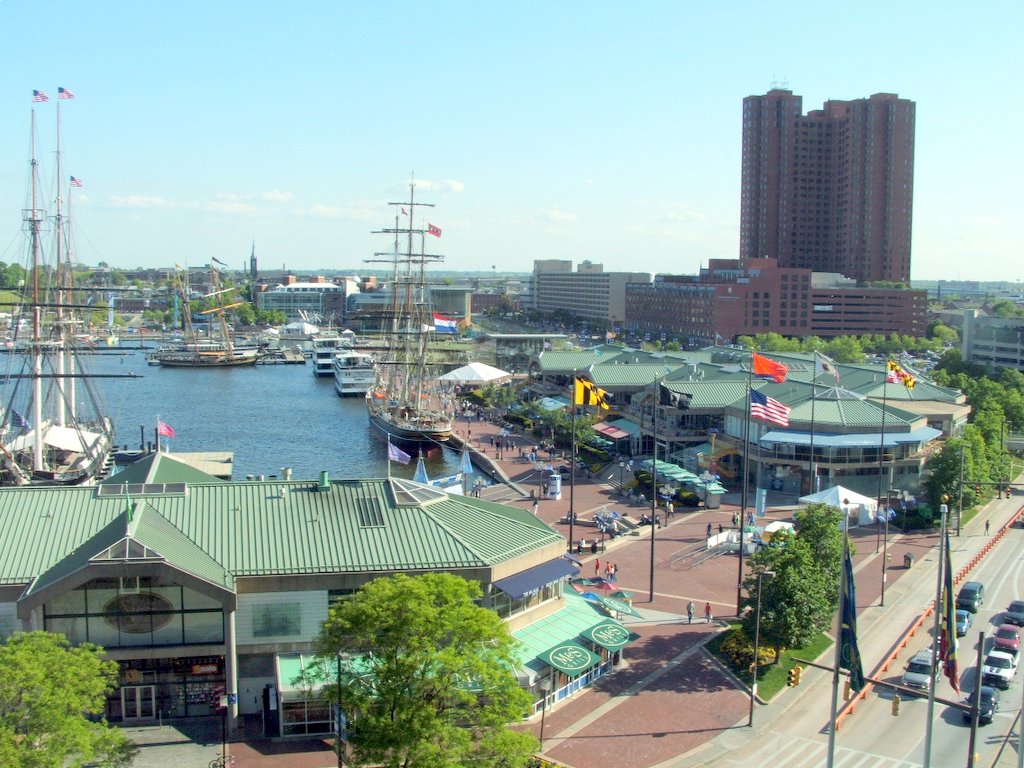
Baltimore Inner Harbor
A picture of the Inner Harbor in Baltimore, Maryland. Picture taken in May 2006.
Thursday, May 04, 2006
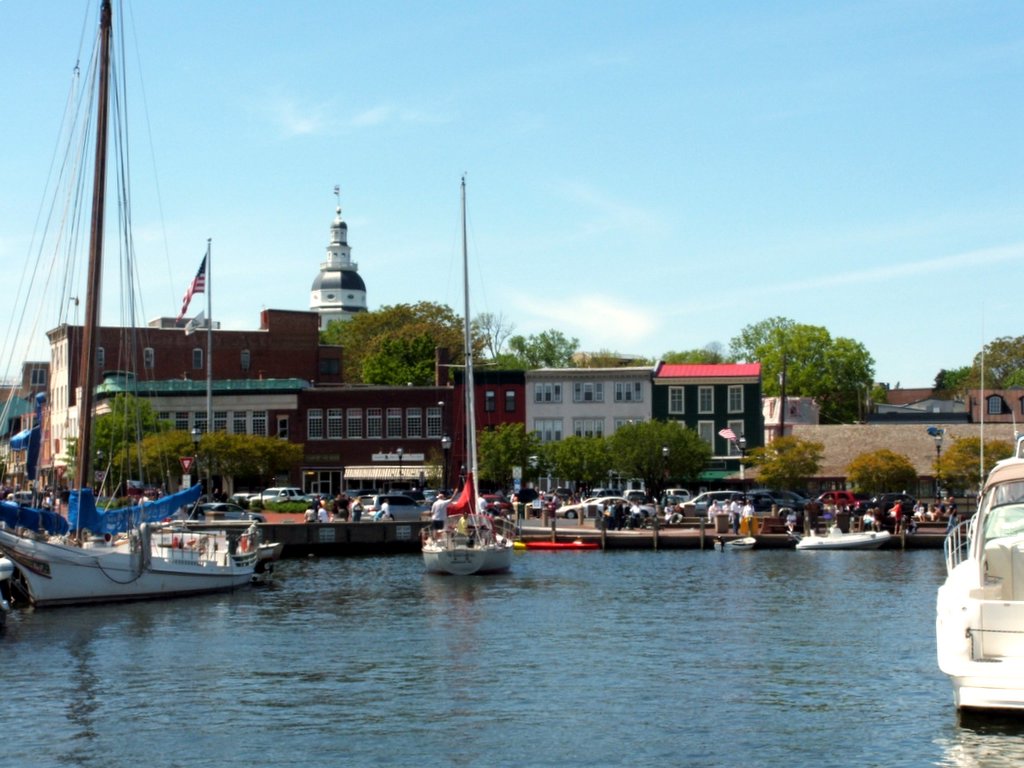
Annapolis City Dock
The City Dock in Annapolis, Maryland. Picture taken in April 2006. The dome in the left center background is the Maryland State Capital building. See also Annapolis was the US Capital for About 9 Months.
Annapolis was the United States Capital for About 9 Months
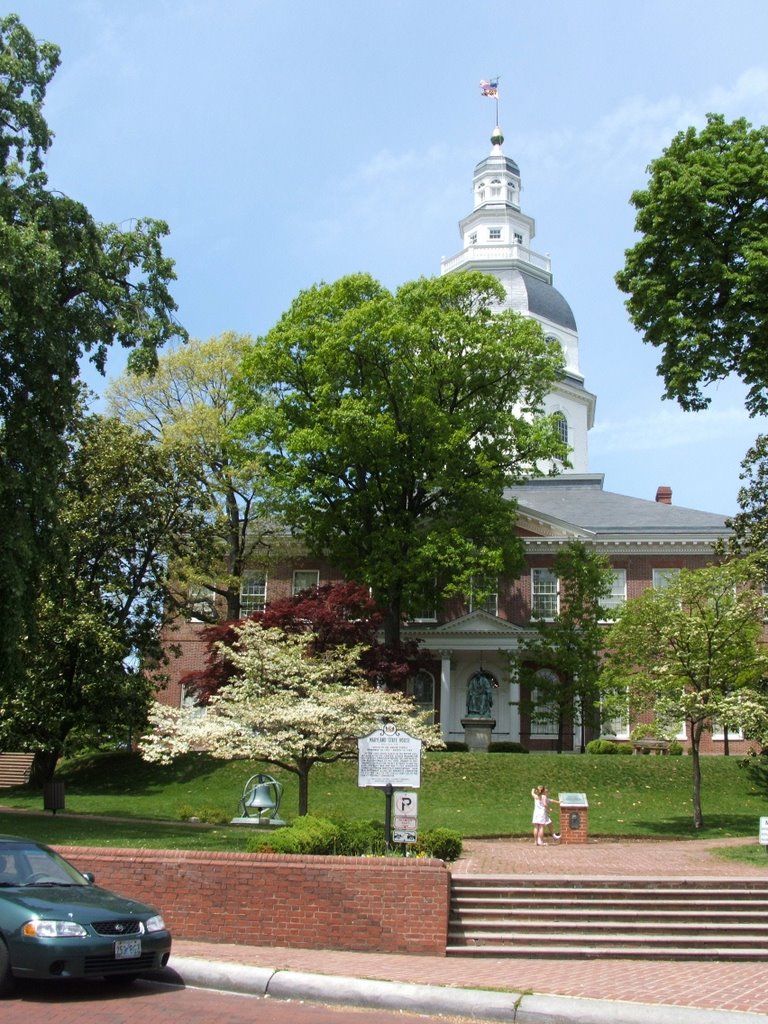
Below is a picture of the Maryland State Capital building, the oldest state capital still in use. It was also the US capital for about 9 months before Washington, DC existed. This picture taken in April 2006.

Here's a historical marker with more detail

A huge painting of George Washington resigning his commission as Commander in Chief of the Continental Army to Congress in Annapolis hangs in the rotunda of today's US Capital building. Click here for more details.
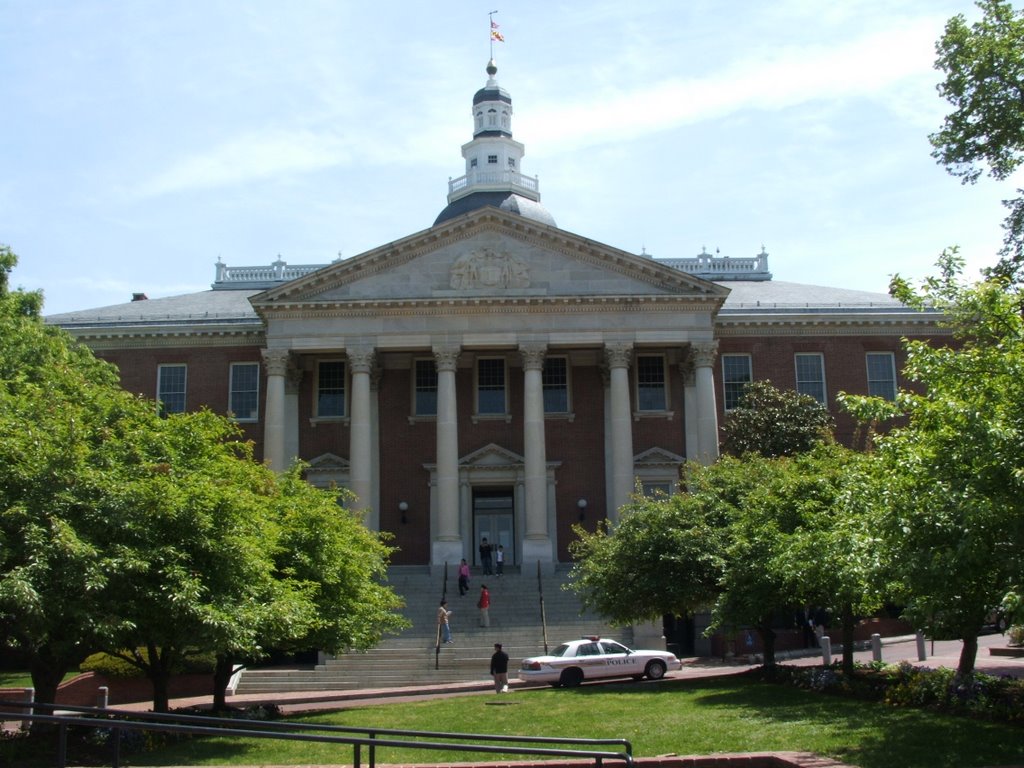
The other side of the Maryland State Capital.

Here's a historical marker with more detail

A huge painting of George Washington resigning his commission as Commander in Chief of the Continental Army to Congress in Annapolis hangs in the rotunda of today's US Capital building. Click here for more details.
The other side of the Maryland State Capital.
Wednesday, May 03, 2006
Courage Runs Deep - Submariner Memorial
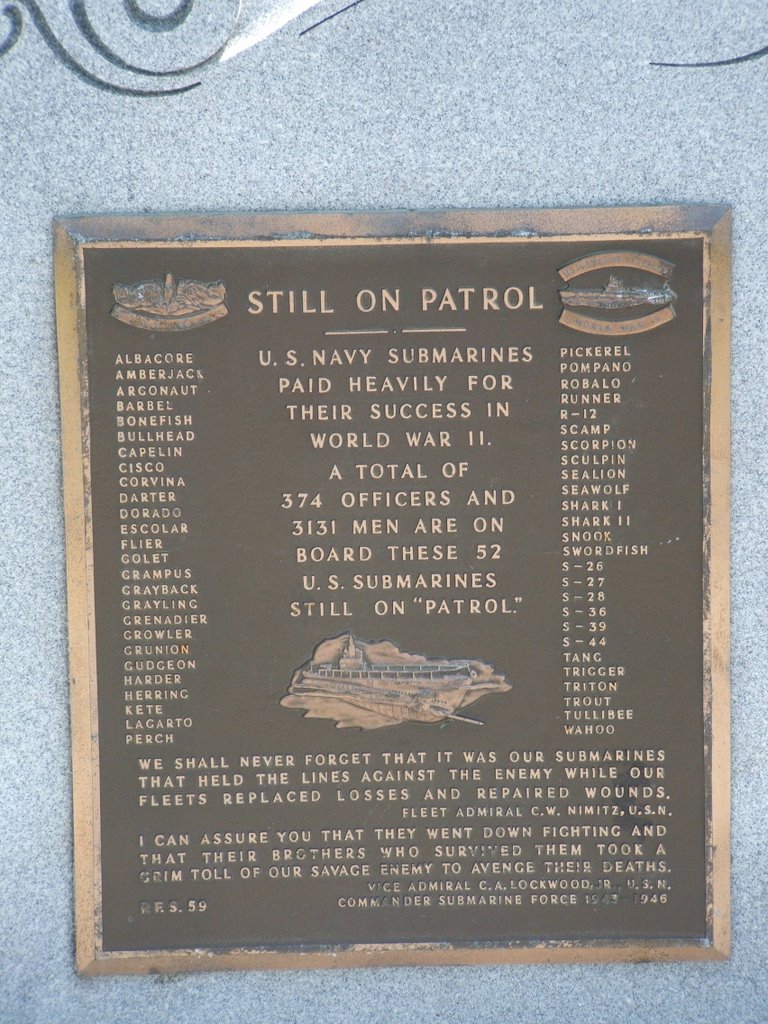
Below are some pictures of a memorial to the 3000+ WWII submariners who lost their lives in the line of duty on 52 submarines "still on patrol". I took the pictures in April 2006 on the campus of the US Naval Academy in Annapolis, Maryland. The view behind the memorial is out into the mouth of the Severn River where it joins the Chesapeake Bay at Annapolis.

 close up of the brass plaque....
 the back side...


 close up of the brass plaque....
 the back side...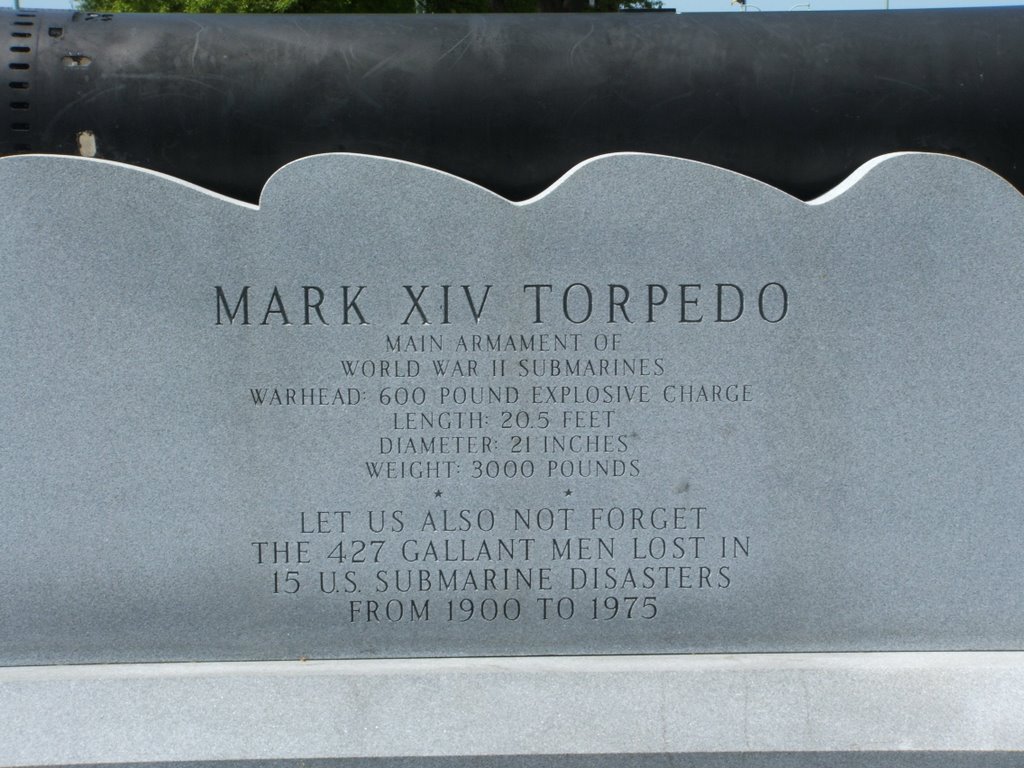
Tuesday, May 02, 2006
Around the World Sailboat Race
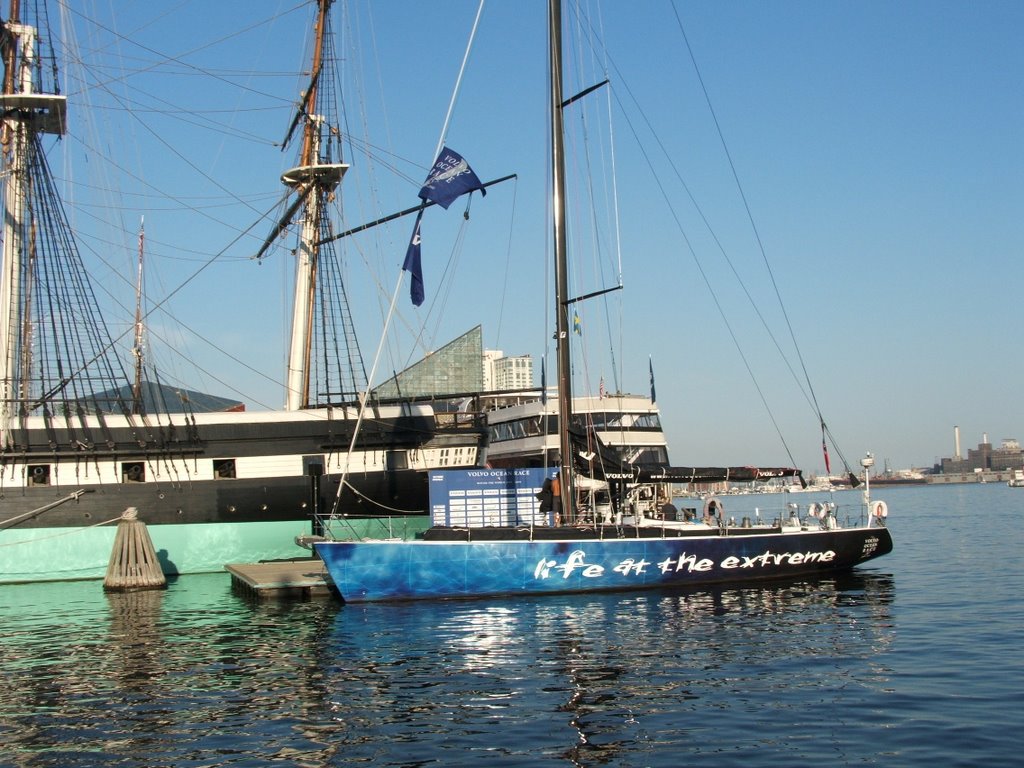
I visited Baltimore, Maryland on business and discovered that sailboats and crews participating in the "Volvo Ocean Race" were in town with all the yachts docked at Inner Harbor. This around the world ocean race started back in November in Spain and is still going on. How does Spain to Sweden by way of a South Atlantic/South Indian/South Pacific route around Antartica sound? (See the picture below.) They just ended a racing leg which started in Rio di Janerio. The race is expected to end in Gotenborg, Sweden in mid June. For more information see the official web site.



Monday, May 01, 2006
US Naval Academy Campus
A squadron of sailboats used by the Midshipmen at the US Naval Academy to race against each other and learn seamanship. Picture taken from the US Naval Academy campus along the Severn River in Annapolis, Maryland in April 2006.
The sailboats have names like Challenger and Resolute.
The sailboats have names like Challenger and Resolute.

Politically Incorrect Tax Dollars at Work: US Naval Academy Chapel #1
The entrance to the United States Naval Academy Chapel in Annapolis, Maryland. Picture taken in April 2006.

Sunday, April 30, 2006
Washington, DC Surrounded by the Confederacy?
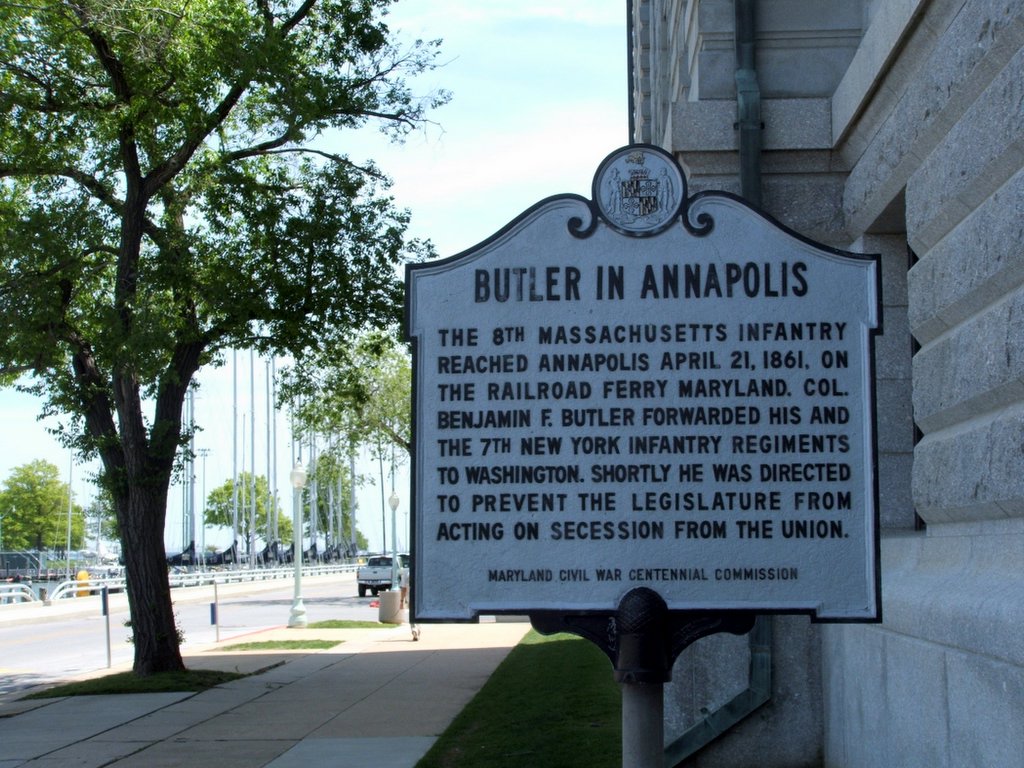
I find the historical marker below on the campus of the United States Naval Academy in Annapolis, Maryland really interesting. It isn't necessarily well known that owning slaves was legal in Maryland when the Civil War broke out in the United States. However, Maryland and a few other "slave states" did not secede from the United States of America (the Union) to join the Confederate States of America. (Missouri was another example of a slave state which did not secede.)
If you don't know your geography very well, you may not realize that Maryland is immediately west, north, and east of Washington, DC. Virginia which was part of the Confederacy was to the west, south, and east. Therefore, if Maryland had sided with the Confederacy in the Civil War, President Abraham Lincoln and the United States Capital in Washington, DC would have been surrounded by the Confederacy.
Based on the historical marker below, it appears that the Union did not want to allow this unpleasant possibility to occur. Union troops took over the Maryland capital of Annapolis and physically prevented the Maryland Sate Legislature from convening and even considering a motion to secede from the Union.
I'm not advocating this should have happened... I'm glad we no longer allow slavery. However, just imagine how United States history might have been different if Washington, DC had been surrounded by the Confederacy at the beginning of the Civil War.
If you don't know your geography very well, you may not realize that Maryland is immediately west, north, and east of Washington, DC. Virginia which was part of the Confederacy was to the west, south, and east. Therefore, if Maryland had sided with the Confederacy in the Civil War, President Abraham Lincoln and the United States Capital in Washington, DC would have been surrounded by the Confederacy.
Based on the historical marker below, it appears that the Union did not want to allow this unpleasant possibility to occur. Union troops took over the Maryland capital of Annapolis and physically prevented the Maryland Sate Legislature from convening and even considering a motion to secede from the Union.
I'm not advocating this should have happened... I'm glad we no longer allow slavery. However, just imagine how United States history might have been different if Washington, DC had been surrounded by the Confederacy at the beginning of the Civil War.
Monday, April 17, 2006
The Tipping Point: How Little Things Can Make Big Difference
Only once and a while does a book I read really make a significant impact. The Tipping Point: How Little Things Can Make a Big Difference was one of those books. I’m not sure I’ll ever look at the world the same way again.
Ever heard of a American Revolutionary War historical figure named William Dawes? Ever hear of Paul Revere. Would it surprise you to know that William Dawes and Paul Revere played the same role in trying to alert anti-British colonists of an impending attack? Why is it everyone remembers Paul Revere and not William Dawes?
The author uses this and many other examples to explain why some information spreads by word of mouth like wildfire, how fads get started, how epidemics spread, why some messages are “sticky” (easily remembered), why anti-smoking campaigns aren’t working, and more.
He proposes Three Rules which control epidemics or the rapid, viral spread of information (or disease).
Just a few people can make a big difference in spreading rumors, starting fashion trends, spreading disease, or making a product “cool” – but only if they’re the right people:
Ever heard of a American Revolutionary War historical figure named William Dawes? Ever hear of Paul Revere. Would it surprise you to know that William Dawes and Paul Revere played the same role in trying to alert anti-British colonists of an impending attack? Why is it everyone remembers Paul Revere and not William Dawes?
The author uses this and many other examples to explain why some information spreads by word of mouth like wildfire, how fads get started, how epidemics spread, why some messages are “sticky” (easily remembered), why anti-smoking campaigns aren’t working, and more.
He proposes Three Rules which control epidemics or the rapid, viral spread of information (or disease).
- The Law of the Few
- The "Stickyness" Factor
- The Power of Context
Just a few people can make a big difference in spreading rumors, starting fashion trends, spreading disease, or making a product “cool” – but only if they’re the right people:
- “Connectors” – People who know lots of people. People other people want to know. They are “social glue”.
- Paul Revere is remembered in history because he was a connector. He knew who to tell in each village along the way on his midnight ride. He knew who would spread the word quickest. William Dawes was not connected and the people he told about the impending British attack were not able to get their militia gathered together to be effective participants in the battle.
- “Mavens” – People who provide us with new information. People who accumulate knowledge but are not passive collectors. They want to share what they know. They educate and help without persuading.
- People like the lady you always ask which store has the cheapest price for an item
- The guy you ask for a restaurant recommendation
- The road warrior who knows which hotel in Chicago is undergoing noisy renovations and which is close to live blues music.
- “Salesmen” – They persuade us when we are unconvinced. They get us to make decisions or change our minds. They build trust and rapport quickly. They infect others with their emotions.
- When Yale University wanted to encourage students to get tetanus shots at the campus health center, they found little difference between using a “high fear” brochure showing gruesome pictures of suffering tetanus victims and “low fear” brochure with toned down verbiage and no pictures. Only 3% actually took the time to get inoculated. By simply republishing the two brochures with a campus map with the location of the health center circled and giving inoculation hours increased the inoculation rate to 28% of the campus. With the possible exception of new freshman, most of the students probably already knew where the campus health center was and didn’t actually need the map to know where to go to get the shot. Something about the presence of the map they didn’t need made the tetanus information “sticky.”
- At the insistence of child psychologists, the creators of educational kids show Sesame Street originally intended to never mix real actors on street scenes with The Muppets. Psychologists did not want to confuse kids with what was real and what was fantasy. However, when they studied pre-school age children they discovered they stopped paying attention to the adult actors in the street scenes and went back to their toys. Against all professional advice, they found that their “epidemic” of educational information was “sticky” when human actors and Muppet actors where mixed in the same scenes.
- An article of fashion becomes a trend when the people others consider “cool” adopt it first.
- Syphilis spread in Baltimore when the city simultaneously tore down crime-ridden housing projects (causing those people most at risk to disperse throughout the city) and cut the staff of the free clinic in half to save money (it took victims longer to get treatment)
- Paul Revere was arguably more successful spreading the word of an impending British attack because the people who needed most to receive his message were at home asleep instead of out running errands.
- Bernhard Goetz became an unlikely urban hero when he shot subway muggers at a time New Yorkers were most afraid of violent crime in their city.
- The leadership of the city of New York attribute much of their success in driving down violent crime to an emphasis on rigorous prosecution of those painting graphitti on subway trains, breaking windows, jumping subway turnstalls without paying, etc. They believe that if residents see others get away with the “little things” that context encourages others to see what they can get away with in an escalating fashion.
Friday, April 14, 2006

Subscribe to:
Posts (Atom)


